

Imagine earning an income stream that works for you 24/7, even while you’re sleeping, on vacation, or focusing on other projects.
This isn’t a fantasy; it’s the reality of automated passive income, and affiliate marketing is one of the most accessible pathways to achieve it.
This business model allows you to build a digital asset that generates revenue on autopilot, freeing you from the traditional trade of time for money.
The affiliate marketing industry is not just surviving; it’s thriving, with projections showing it will reach a global value of $31.7 billion by 2031, indicating immense and sustained growth potential.
This blueprint isn’t about quick, unsustainable wins.
It’s about strategically building a simplified, automated system designed for long-term success.
We will walk through the exact steps to transform your passion into a hands-off income-generating machine.
The Dream of Automated Income: Why Affiliate Marketing?
The allure of passive income is strong, but many online business models require constant hands-on management.
Affiliate marketing, when built correctly, breaks this mold.
It’s a performance-based marketing strategy where the initial setup of content and systems can continue to produce results for months or even years with minimal ongoing effort.
What Exactly is Affiliate Marketing?
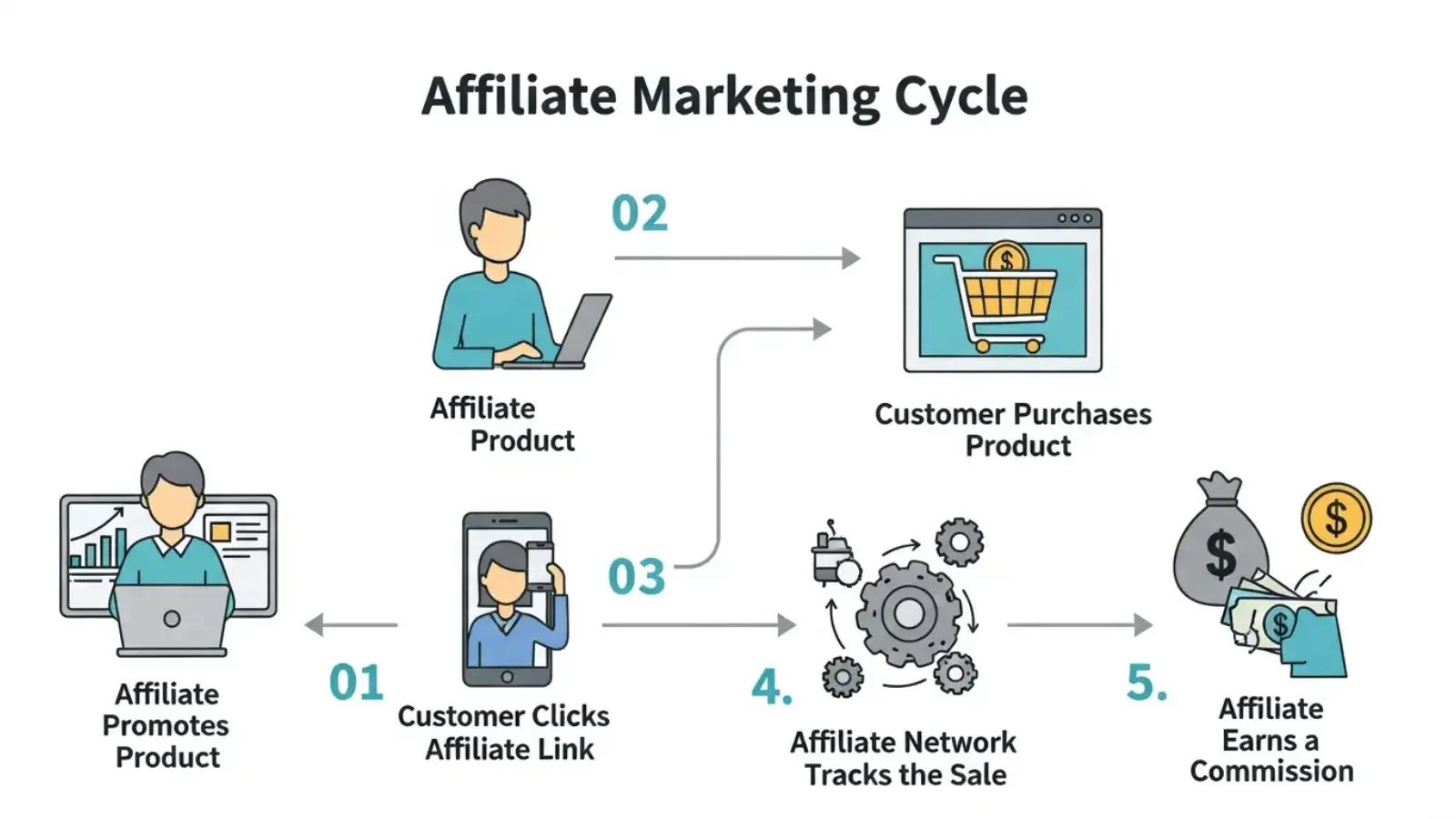
The affiliate marketing model is a simple cycle: you promote a product, a customer buys through your unique link, and you earn a commission on the sale.
At its core, affiliate marketing is a partnership.
An individual or company, known as the affiliate, earns a commission for marketing another person’s or company’s products.
The affiliate simply searches for a product they enjoy, then promotes that product and earns a piece of the profit from each sale they make.
The sales are tracked via unique affiliate links from one website to another.
It’s a business model built on recommendation and trust, where you connect an audience with a product that solves their problem.
The Appeal of “Earn While You Sleep”
The “earn while you sleep” concept is the ultimate goal of any passive income strategy.
In affiliate marketing, this becomes possible because your content—be it a blog post, a product review, or a video—is available to a global audience around the clock.
A customer in another time zone can read your review, click your affiliate link, and make a purchase while you are fast asleep.
Your digital assets become your tireless sales team, working for you without needing breaks or supervision.
How Automation Transforms Affiliate Marketing
True passive income is achieved through automation.
Instead of manually promoting links every day, you build systems that do the work for you.
This includes creating evergreen content that ranks on Google and drives continuous traffic, setting up automated email marketing sequences that nurture leads and promote offers, and using tools to schedule social media content.
Automation shifts your role from a constant promoter to a system architect, allowing you to scale your business without scaling your workload.
Who This Blueprint Is For
This blueprint is designed for anyone seeking to build a sustainable online income stream with a focus on automation.
Whether you’re a complete beginner overwhelmed by the complexities of starting an online business, a content creator looking to monetize your audience effectively, or an experienced marketer aiming to create a more passive, hands-off system, these steps will provide a clear and actionable path forward.
Laying the Groundwork: Essential Foundations Before You Begin
Before diving into building your automated system, it’s crucial to understand the fundamental components and adopt the right mindset.
A solid foundation prevents common pitfalls and sets you up for long-term success, ensuring your affiliate business is built on stable ground.
Understanding the Affiliate Ecosystem: Merchant, Affiliate, Consumer, Network
The affiliate marketing model operates with four key players working in harmony:
- The Merchant (or Advertiser): The brand, creator, or company that owns the product.
- They create the product and set up the affiliate program.
- The Affiliate (or Publisher): This is you.
- You promote the merchant’s product to your audience through your content and unique affiliate links.
- With 81% of brands utilizing affiliate marketing programs, there is no shortage of merchants to partner with.
- The Consumer: The end-user who sees your promotion, clicks your affiliate link, and purchases the product from the merchant.
- The Affiliate Network (Optional): An intermediary that manages the relationship between merchants and affiliates.
- Networks like ShareASale or ClickBank handle tracking, reporting, and payments, simplifying the process for both parties.
The Different Payout Models: PPS, PPL, PPC
Your commission is determined by the program’s payout model.
Understanding these is key to selecting the right offers:
- Pay-Per-Sale (PPS): The most common model.
- You earn a percentage of the sale price when a consumer purchases a product after clicking your affiliate link.
- This is the foundation of most affiliate revenue.
- Pay-Per-Lead (PPL): You get paid when a consumer completes a desired action, such as signing up for a free trial, submitting a contact form, or subscribing to a newsletter.
- Pay-Per-Click (PPC): You earn a small commission for every click on your affiliate link, regardless of whether a sale or lead is generated.
- This model is less common but can be effective for driving high volumes of traffic.
Setting Realistic Expectations & The Long Game for Passive Income
Affiliate marketing is a real business, not a get-rich-quick scheme.
The “passive” part of passive income comes after a significant upfront investment of time and strategic effort.
It can take months of consistent content creation and system building before you see substantial income.
The goal is to create a durable asset that generates revenue for years, which requires patience and a focus on long-term value over short-term gains.
The Mindset for Automated Success: Patience, Persistence, and Strategic Setup
Success in automated affiliate marketing hinges on a specific mindset.
Patience is required to see your efforts compound over time as search engines index your content and your audience grows.
Persistence is necessary to consistently create valuable content and refine your systems, even when results aren’t immediate.
Most importantly, a strategic setup mindset is crucial.
Every piece of content and every system you build should be designed with automation and long-term value in mind from day one.
The 7-Step Blueprint for Automated Earn While You Sleep Income
With the foundational knowledge in place, it’s time to build your automated income engine.
This seven-step blueprint is designed to be followed sequentially, with each step building upon the last to create a cohesive and effective system.
Step 1: Pinpoint Your Niche & Passion with Evergreen Potential
Your niche is the specific topic or industry you will focus on.
A well-chosen niche is the cornerstone of your entire affiliate business, as it dictates your audience, the products you’ll promote, and the content you’ll create.
Identifying Your Target Audience and Their Needs (Audience, Reader)
Before choosing a product, you must first understand the person you’re helping.
Who is your target audience? What are their biggest challenges, questions, and desires? Your role as an affiliate marketer is to be a trusted problem-solver.
By deeply understanding your audience’s needs, you can create content and recommend products that provide genuine solutions, building trust and driving conversions.
A reader who feels understood is far more likely to trust your recommendations.
Researching Profitable Niches for Recurring Revenue
A profitable niche balances your personal interest with market demand and monetization potential.
Look for niches where products or services offer recurring revenue—such as software subscriptions, memberships, or consumable products.
This model is a powerful driver of passive income, as a single referral can generate commission payments for months or even years, creating a stable and predictable income stream.
Validating Niche Demand and Competition
Once you have a few niche ideas, validate them.
Use tools like Google Trends to check for sustained or growing interest in the topic.
Analyze keywords to see what people are actively searching for.
Look at competitor blogs and YouTube channels.
A complete lack of competition often means there’s no money to be made, while healthy competition indicates a validated market.
Your goal is to find a sub-niche where you can establish yourself as a unique authority.
Choosing Evergreen Topics for Sustained Interest (Content Marketing)
Evergreen content is the heart of an automated affiliate system.
These are topics that remain relevant and valuable to your audience long after they are published.
A blog post on “how to start a vegetable garden” or “the best budget headphones for students” will attract traffic from Google for years.
This content marketing strategy ensures your initial effort continues to pay dividends, attracting new traffic and earning commissions on autopilot without constant updates.
Step 2: Discover and Select High-Converting Affiliate Programs
With your niche defined, the next step is to find high-quality products and services to promote.
The affiliate programs you choose will directly impact your earning potential and your credibility with your audience.
Where to Find Reputable Affiliate Programs (Affiliate Network, Affiliate Program, Merchant Program)
There are three primary places to find affiliate programs:
- Affiliate Networks: Large marketplaces like ShareASale, CJ Affiliate, and ClickBank host thousands of merchant programs in one place, making it easy to find and apply for relevant offers.
- Major Retailer Programs: Giants like Amazon Associates offer access to millions of products, making it a great starting point for beginners in almost any niche.
- Direct Merchant Programs: Many companies run their own in-house affiliate program.
- Check the website footer of your favorite brands and tools for a link that says “Affiliates” or “Partners.”
Key Criteria for Program Selection (Commission Rate, Payouts, Cookie Duration, Conversion Potential)
Evaluate potential affiliate programs based on these key factors:
- Commission Rate: What percentage of the sale will you earn? High-ticket items might offer lower percentages, while digital products often provide higher rates (30-70%).
- Payouts: Check the minimum payout threshold and payment methods to ensure they work for you.
- Cookie Duration: This is the period during which you’ll be credited for a sale after someone clicks your link.
- Longer cookie durations (30, 60, or 90 days) are better, giving the consumer more time to make a decision.
- Conversion Potential: A high commission rate is useless if the product doesn’t sell.
- Investigate the product’s sales page, reviews, and overall reputation.
Prioritizing Evergreen Products and Services (Digital Courses, Digital Marketing Solutions)
Just like evergreen content, evergreen products have long-term relevance.
Digital marketing solutions, software-as-a-service (SaaS) tools, and high-quality digital courses are excellent examples.
These products often solve persistent problems and are less susceptible to seasonal trends, ensuring your promotional content remains valuable and profitable for years.
Exploring Diverse Affiliate Networks (Amazon Associates, ShareASale)
Don’t limit yourself to a single affiliate program.
Diversifying your income streams protects your business.
Start with a broad program like Amazon Associates to gain experience, then expand to networks like ShareASale or direct partnerships.
This strategy allows you to promote a mix of physical products, digital goods, and services, creating a more resilient and robust income portfolio.
Step 3: Architect Your Automated Content Hub
Your content hub is the central platform where your audience will find your valuable content and affiliate links.
For true automation and long-term asset building, a self-hosted website or blog is the undisputed champion.
Choosing Your Primary Platform for Automation (Website/Blog, YouTube, Social Media, Email Marketing)
While YouTube and social media are excellent for driving traffic, a website or blog is the only platform you truly own and control.
It serves as the central hub for your affiliate business, where you can publish detailed content, capture emails, and optimize for search engines like Google.
Email marketing then becomes your primary automation tool for nurturing this audience directly.
Setting Up Your WordPress Website or Blog (WordPress, Hosting Service, Website/Blog)
WordPress.
org is the industry standard for building a flexible and powerful blog.
It’s a content management system that gives you complete control.
To start, you’ll need two things: a domain name (your website’s address) and a reliable hosting service.
Setting up a professional-looking website is simpler than ever with modern themes and page builders, allowing you to create a solid foundation for your content.
Establishing a Strong Online Presence on Secondary Channels
Once your blog is established, use secondary channels like YouTube, Pinterest, or Instagram to amplify your reach.
Create content tailored to each platform that directs traffic back to your primary content hub—your blog.
For instance, a YouTube video can summarize a detailed blog post, with a link in the description for viewers to learn more.
This creates multiple pathways for your audience to find your automated systems.
Integrating Essential Tools for Future Automation (System Integration)
From the beginning, integrate tools that will power your automation.
Install an email marketing service like ConvertKit or MailerLite to start building your email list.
Use analytics tools like Google Analytics to track your traffic and understand user behavior.
Proper system integration ensures that as your business grows, your processes remain streamlined and efficient, forming the technical backbone of your passive income machine.
Step 4: Craft Evergreen, AI-Powered Content That Converts
Content is the fuel for your affiliate marketing engine.
The goal is to create high-value, evergreen content that answers your audience’s questions, solves their problems, and naturally integrates your affiliate recommendations.
Understanding Content Types for Automated Income (Blog Post, Product Review, Tutorials, Reviews)
Certain types of content are perfectly suited for driving affiliate sales on autopilot:
- In-Depth Product Reviews: Detailed, honest reviews build trust and help consumers make informed purchasing decisions.
- Comparison Posts: Pitting two or more products against each other helps buyers choose the best option for their specific needs.
- Tutorials and How-To Guides: These practical posts solve a problem using a product you recommend, demonstrating its value in a real-world context.
Leveraging AI for Efficient Content Creation (AI Content Machine, Chatbots)
Artificial intelligence has revolutionized content creation.
AI tools can act as your personal “content machine,” helping you brainstorm ideas, create detailed outlines, overcome writer’s block, and even draft entire sections of a blog post.
This dramatically speeds up the content creation process, allowing you to build your automated hub faster.
While AI should be used as an assistant to enhance your unique experience and expertise, it is an invaluable tool for scaling content production efficiently.
The dream of earning a significant income while you sleep is not just a possibility; it’s an achievable reality through the strategic application of affiliate marketing.
By moving beyond simple link promotion and architecting a truly automated system, you build a digital asset that works for you tirelessly.
This 7-step blueprint provides the essential framework, but true success lies in its execution.
We’ve covered the critical initial stages: establishing a solid foundation, pinpointing a profitable evergreen niche, selecting high-converting affiliate programs, building your owned content hub, and crafting the kind of content that converts on autopilot.
Your next steps are clear.
Commit to the process, embrace the mindset of a system architect, and begin with Step 1.
Choose your niche, identify your audience, and start building your content hub today.
Each piece of evergreen content you create and every automated email sequence you implement is another digital employee working to generate passive income.
The journey requires upfront effort, but the reward is a scalable, resilient business and the ultimate freedom that comes with an automated “earn while you sleep” income.
